Deep Puppetry™
An artistic practice of meeting what exceeds us
student work, Anna Andersson
A piece of cloth from the rag pile, a stick from yesterday's walk, or sheets of newspaper tangled around the cardboard tube you almost recycled.
Almost immediately, they become something.
Maybe a bird or a baby.
A memory or a joke.
A monster or, yes, a puppet.
Just as quickly, we begin participating in what they are.
We name them, protect them, distance ourselves from them. We wonder about them, and we care for them.
None of this was inside the object. It happened in the encounter.
student work, Jacqueline Darby
WHY BEGIN WITH OBJECTS?
Objects ask remarkably little of us. A piece of paper won't feel rejected if we ask the wrong question. A stick doesn't need reassurance. A scrap of fabric doesn't mind if we misunderstand it.
Because the interpersonal stakes are low, very small relational movements become easier to notice.
We can look.
Look away.
Return.
Move it once.
Pause.
Notice what changes.
Art offers another pace, one where not everything has to become something quite so quickly.
student work, Lorena Rodriguez
WHY PUPPETS?
A piece of paper can become a body, and a figure can seem lonely. You can find yourself waiting for it to move or caring about what happens to it, even while knowing exactly what you're looking at.
Was the feeling in the puppet? Or was it in us? Was it between us?
The question doesn't have to be answered. The material gives us somewhere to stay while we don't know.
The material resists us, too. It has weight, balance, texture. It falls differently than we intended. A figure that seemed obvious can become strange again.
And we bring things to it: memory, expectation, recognition, imagination, desire, fear, affection.
Sometimes recognition feels like intimacy, and then something shifts. Another person encounters the same figure and sees something we didn't.
The puppet is alterable, but it is also irreducible.
It can become many things without becoming whatever we decide it is. The puppet can exceed the version we have made of it.
Why this matters
What happens between a person and a puppet is not separate from questions about how we participate with one another.
If I decide too quickly what you mean, I respond to the version of you I've already made. That response becomes part of the situation. It changes what can happen next.
Interpretation is never just interpretation.
How we understand someone shapes how we participate in relation to them. Our assumptions can become expectations they are asked to meet, definitions they have to push against, or limits on what we can recognize them as being.
Power operates here, too: in who gets to decide what something means, whose understanding carries authority, and who has to live with someone else's interpretation.
We can care about autonomy and still organize around someone else's experience. We can value difference and still rush to make it familiar. We can listen and still tell someone what they mean. We can help and still make ourselves necessary.
We've learned these ways of participating so well that they can stop feeling like choices.
You can't interrupt what you can't perceive.
A different world cannot be made entirely from the ways of seeing and participating that produced the present one.
So the question is not only: What do I intend? It is also: What does my participation make possible?
What people have discovered
“Deep Puppetry feels like discovering a new language. It offers a way to explore complex questions in both artmaking and life - not by solving them, but by feeling and integrating them. In the process of enlivening puppets, I find myself transformed. It becomes unclear who is inhabiting whom.”
-Karina Hashim Faulstich
“This program has opened so much for me and reignited my creative practice. It connected me with the experimental part of myself, where there is no way to do wrong. Witnessing others do the same exercises has made all the difference. It has opened my perspective to other questions, explorations, and possibilities.
The general tone and pace of the program allows for time and breath. Even in the way Laura explains things, like every thought is a thought in progress. This feels like a demonstration that another pace is possible.”
-Aida Calderon Garvis
“This time together has really been offering so much to my academic work and acting as a way to kind of stitch all of the thinking I’ve been doing into substance, making it earthly, in a way.
I’m really excited about rethinking what a research question does - like, what does it look like to think of performing a research question rather than trying to answer it? To breathe life into a question through our hands and attention, and to attend to what appears without having to interpret it or to make it intelligible.”
-Karalyn Riepert
“I still don’t know where the threshold is between a thing and a puppet and how you know you crossed it.”
“I am realizing a space exists between things. Like between things but also between thoughts, between stimulus and thought. There is a gap. This work makes the space between things bigger.”
“When I think that I don’t get it or haven’t figured it out yet, I am realizing it’s because it has nothing to do with me.
These aren't outcomes I prescribe; they're things people have discovered during practice.
The work
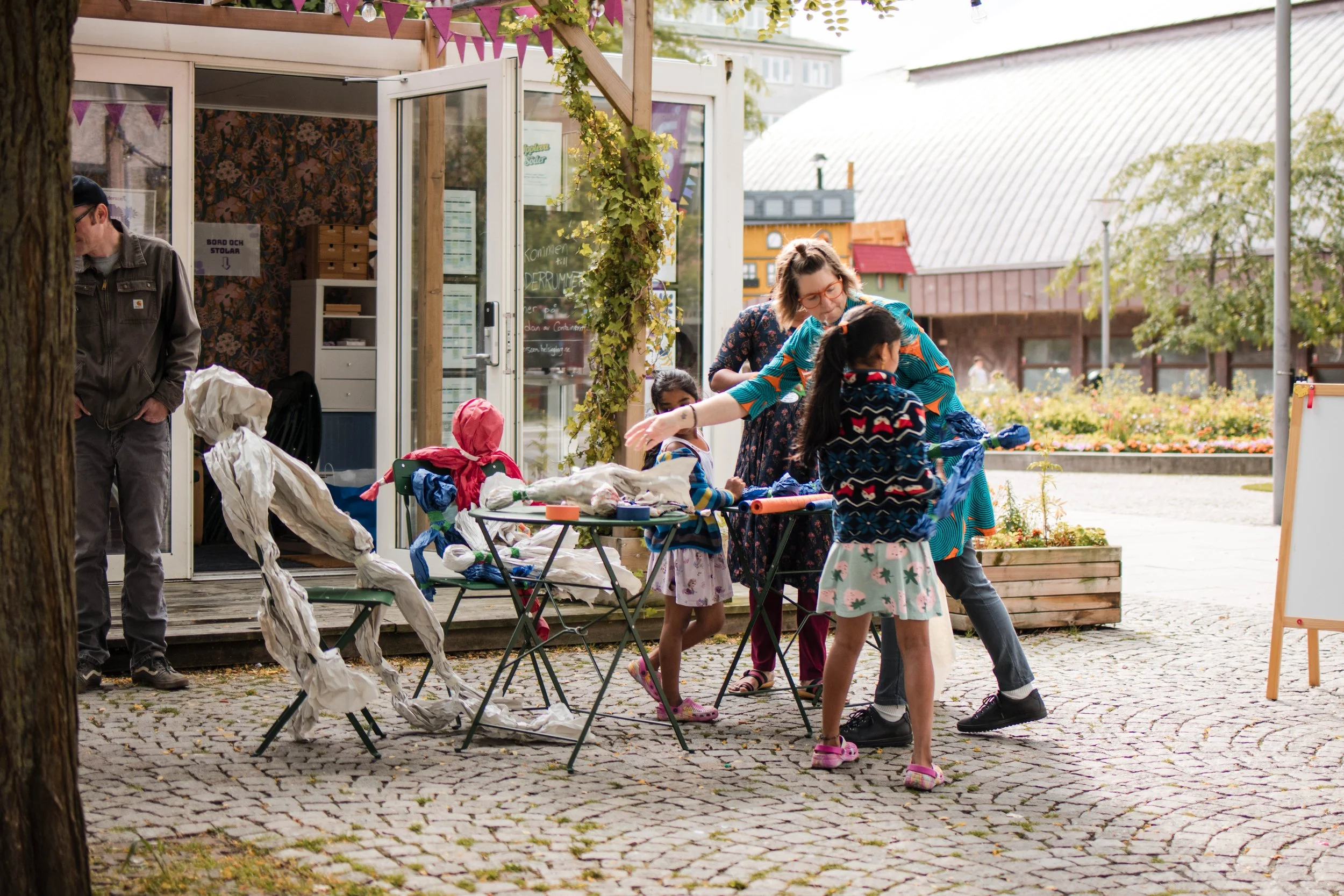
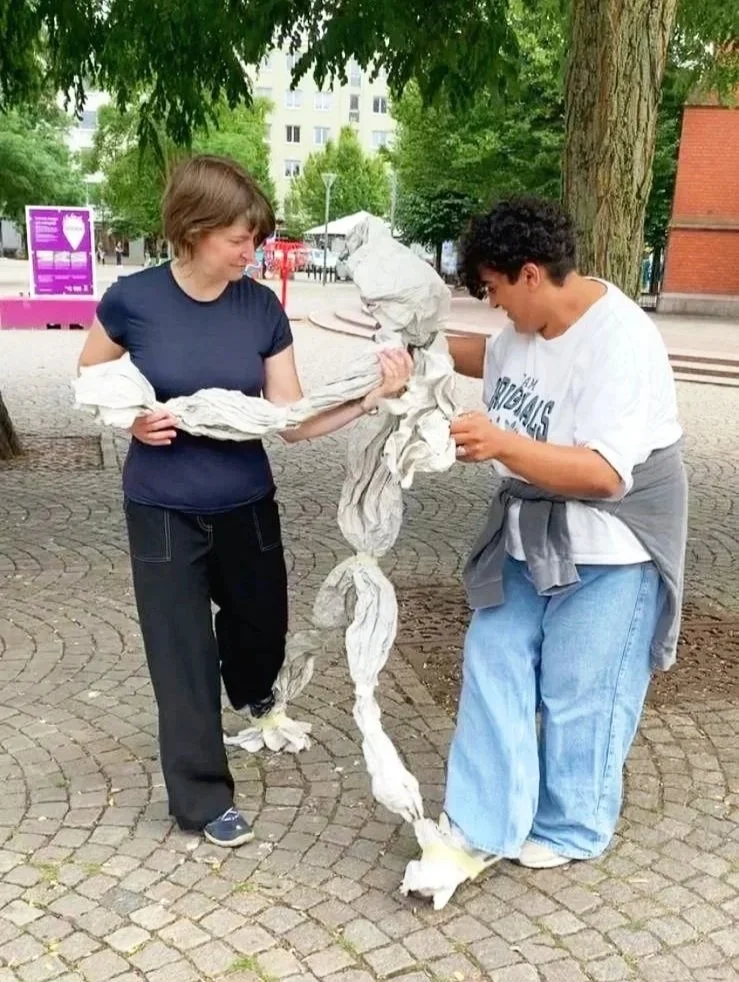
Deep Puppetry has taken different forms: studios, workshops, artistic laboratories, installations, participatory projects, and collaborations.
The materials are usually ordinary. The form follows the encounter.
Enrolling now:
Love, Projection, and Puppets
Love, Projection, and Puppets is the current development of Deep Puppetry: an eight-week live artistic inquiry into projection, recognition, attachment, imagination, love, and encounter.
At its center is a question: What is the difference between loving someone and loving our experience of them?
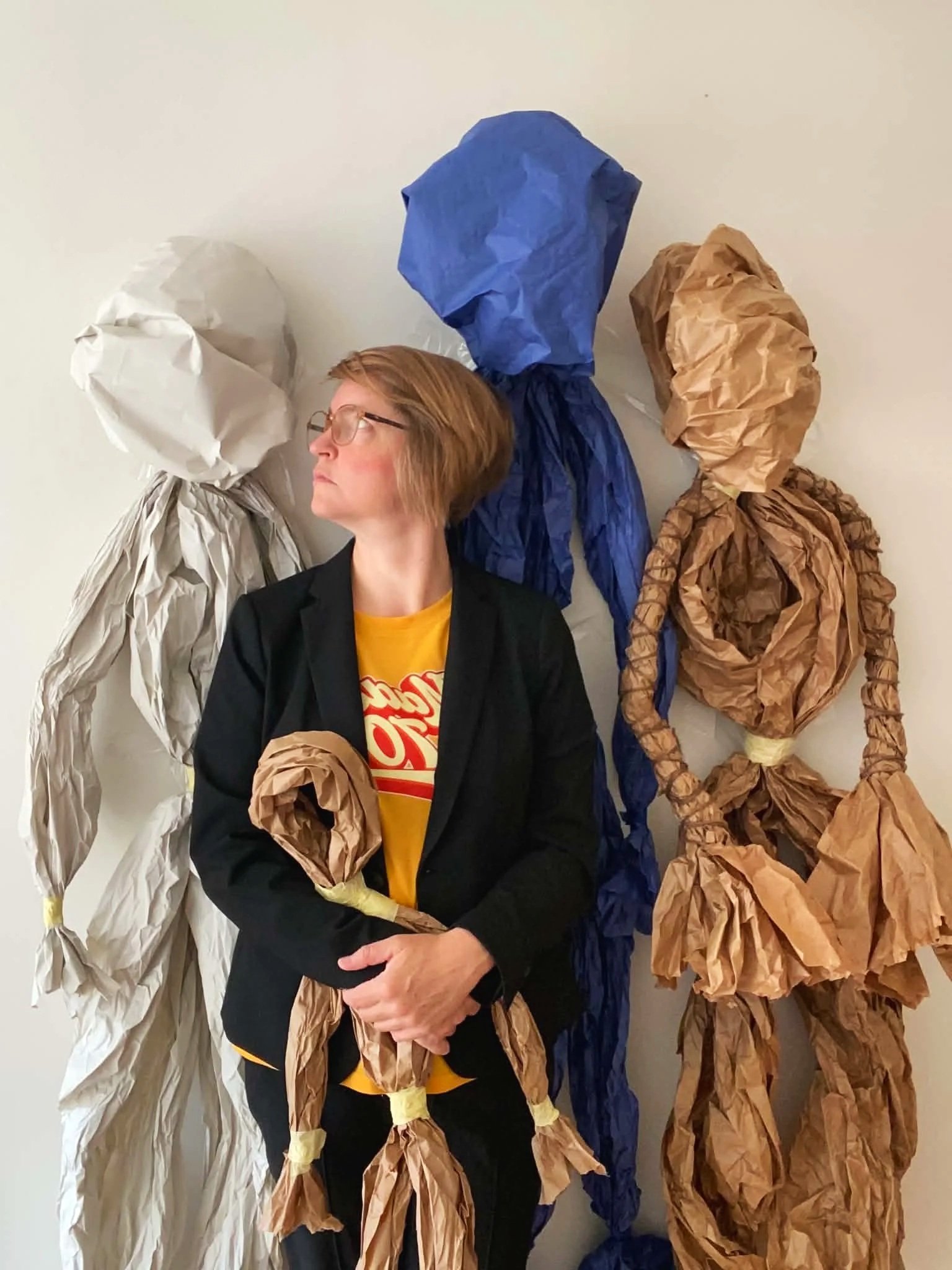
student work, Fen Root
COLLABORATIONS & COMMISSIONS
Deep Puppetry also takes shape through collaborations and commissions with artists, educators, cultural institutions, festivals, communities, and groups.
THE PRACTICE IS STILL BECOMING
Deep Puppetry continues to change through the people who enter it. Someone sees something I didn't. A material behaves differently than I expected. A familiar exercise becomes unfamiliar again. A question opens where I thought there would be an answer.
I don't think of Deep Puppetry as a finished method. It is still becoming.
To make something, to encounter it, to let it exceed what we thought we had made. Then to find out what becomes possible from there.